Calcium Boron Fertilizer Guide: CA150+B50 for Flowering and Fruit Quality
Calcium and boron are not simply two nutrients mixed together. In an effective Ca-B program, calcium helps stabilize cell walls and cell membranes, while boron supports pectin cross-linking, pollen tube growth and nutrient transport. When the Ca-B balance is poor, crops may show curled young leaves, growing-point dieback, weak pollen fertility, fruit cracking, corking and localized calcium deficiency in developing fruit.
1. Why are calcium and boron often discussed together?
Calcium is a key structural nutrient for plant cell walls and cell membranes. In plant tissues, calcium binds with pectin-related structures and helps build stronger cell walls. This supports firmer fruit, more compact cells and better fruit-skin strength. Because calcium has limited mobility inside the plant, young tissues, root tips, flowers and developing fruit are often the first parts to suffer when calcium supply is not continuous.
Boron is a critical trace element for growing points, pollen tubes and cell wall formation. One of the clearest molecular functions of boron in the cell wall is its role in borate cross-linking of RG-II pectin, which helps create a more stable cell wall network. In practical crop nutrition, boron should not be viewed only as a flowering element. It is deeply involved in cell wall structure and reproductive growth.
The roles of calcium and boron overlap strongly in cell walls, membranes, flowers, young fruit and growing points. For fruit crops, greenhouse vegetables, cucurbits, oilseed crops and other crops sensitive to flower and fruit quality, a balanced Ca-B program is often more reliable than applying calcium or boron alone.
2. The core mechanism of calcium-boron synergy
2.1 Strengthening cell walls from two directions
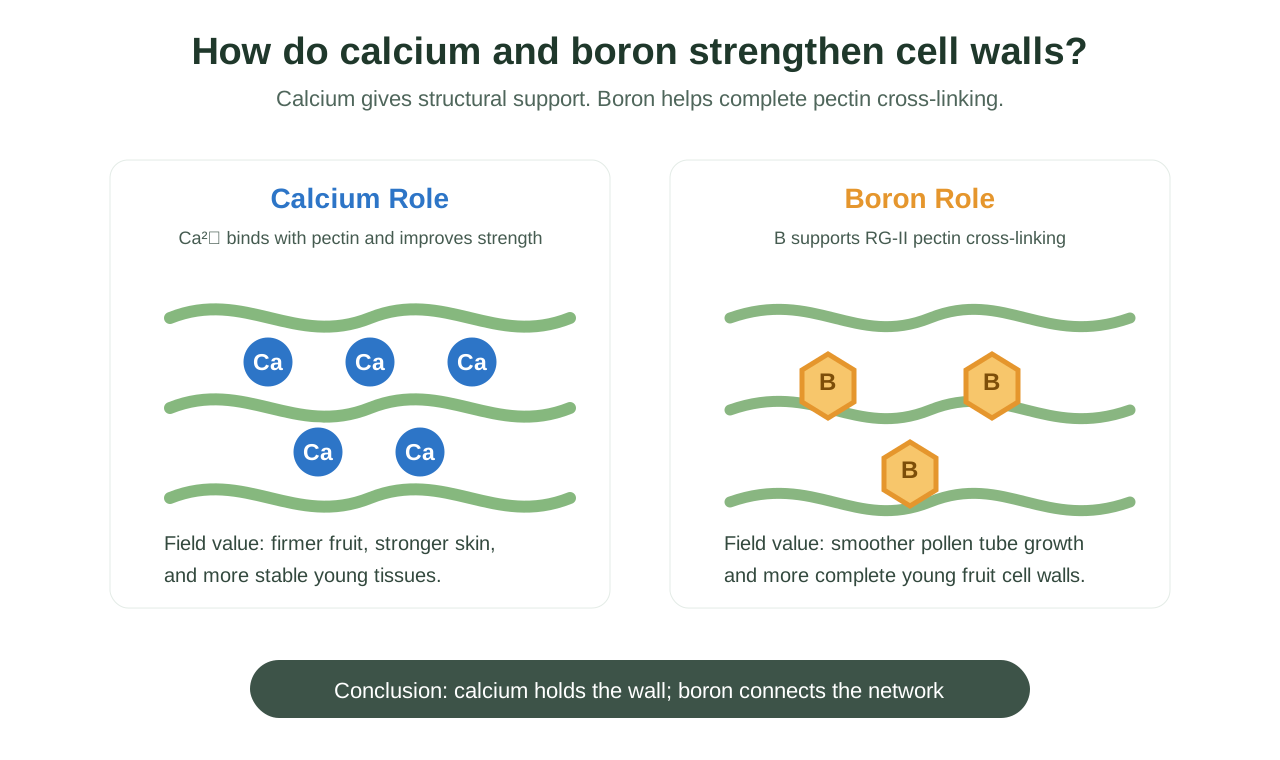
Calcium mainly forms stabilizing bridges with pectin-related structures, helping the cell wall stay firm. Boron helps cross-link RG-II pectin through borate bonds, supporting a more complete cell wall network.
A simple field explanation is: calcium helps hold the wall, while boron helps connect the wall network. If calcium is supplied but boron is insufficient, calcium may not be used efficiently in young tissues. If boron is supplied but calcium is insufficient, the cell wall still lacks enough structural support.
2.2 Supporting pollen germination and pollen tube growth
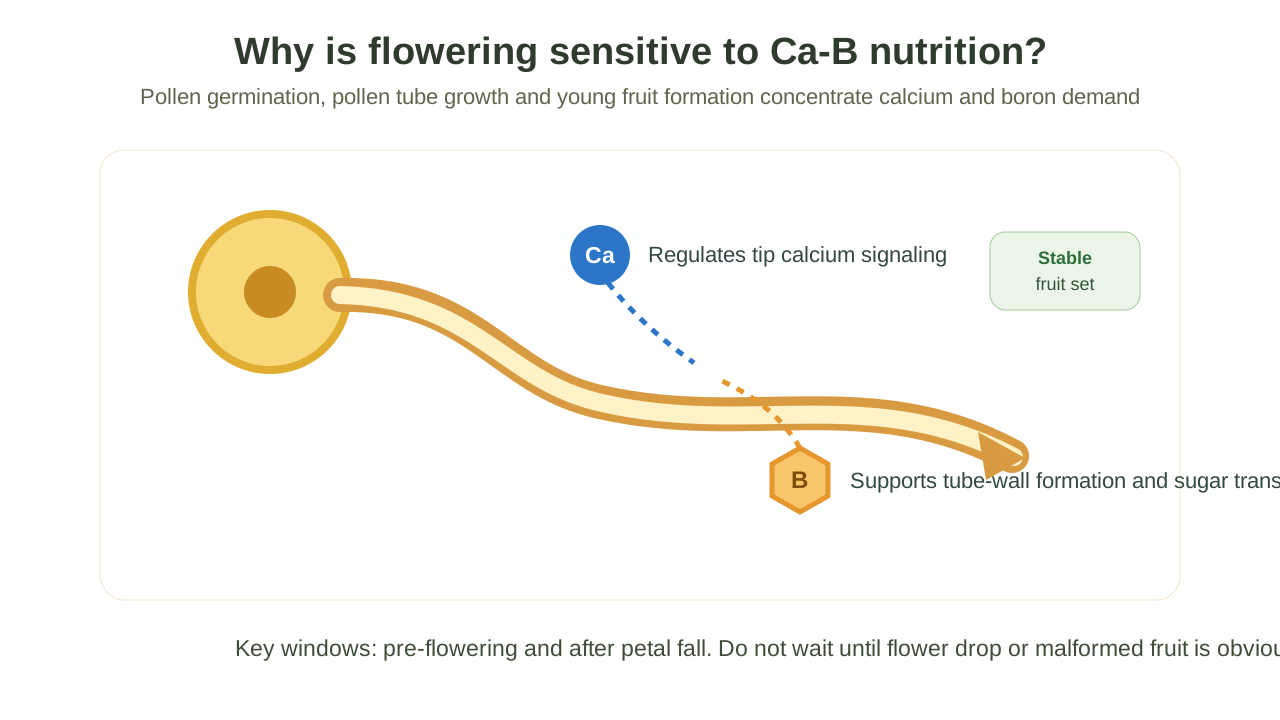
Flowering is one of the most sensitive stages for calcium-boron nutrition. Boron supports pollen germination and pollen tube growth, while calcium is involved in tip calcium signaling and polar growth. Research on apple pollen tubes shows that boron deficiency can disturb calcium distribution, cytoskeleton organization and cell wall components at the pollen tube tip, which affects normal tube elongation.
In the field, this often appears as flowers that open but fail to set evenly, increased flower drop, fruit drop or malformed young fruit.
2.3 Maintaining cell membrane integrity
Calcium helps stabilize cell membranes and reduce leakage from cells. When boron is insufficient, cell walls and membrane systems are easily affected, especially in root tips, growing points and flower tissues. When calcium is insufficient, membrane stability and root nutrient uptake can also decline.
This is why some fields show boron-deficiency-like symptoms even when boron is not completely absent in the soil. Weak roots, poor calcium supply, high pH or poor soil conditions can all limit effective boron uptake and transport.
3. Why can high-calcium soils still show boron deficiency?
Many calcareous soils or orchards with heavy calcium application may contain enough calcium in the soil, yet still show curled young leaves, poor pollen vitality, corking on fruit surfaces or weak fruit set. These problems are common under high pH, high calcium, dry soil conditions or low organic matter.
There are three common reasons. First, high calcium and high pH conditions can reduce boron availability and root uptake. Second, excessive calcium can affect the root-zone and cell-wall environment related to boron entry and movement. Third, when the Ca-B ratio is unbalanced, boron shortage can still limit pectin cross-linking, pollen tube growth and young fruit development even if calcium is abundant.
4. Why is boron application less stable in low-calcium fields?
Under low-calcium conditions, cell membrane stability, root tips and xylem development can be affected. Boron is mainly transported upward with the transpiration stream and xylem flow. If roots are weak or xylem development is poor, applied boron may not move efficiently to growing points, flowers and young fruit.
Typical field symptoms include short and thick roots, fewer root hairs, growing-point dieback, malformed young leaves, poor pollen development and uneven young fruit growth. In this situation, foliar boron alone may only provide short-term relief, while the root and calcium-supply problem remains.
The better approach is soil improvement, root recovery and coordinated calcium-boron foliar nutrition, rather than simply increasing the boron concentration.
5. Field symptoms of Ca-B imbalance
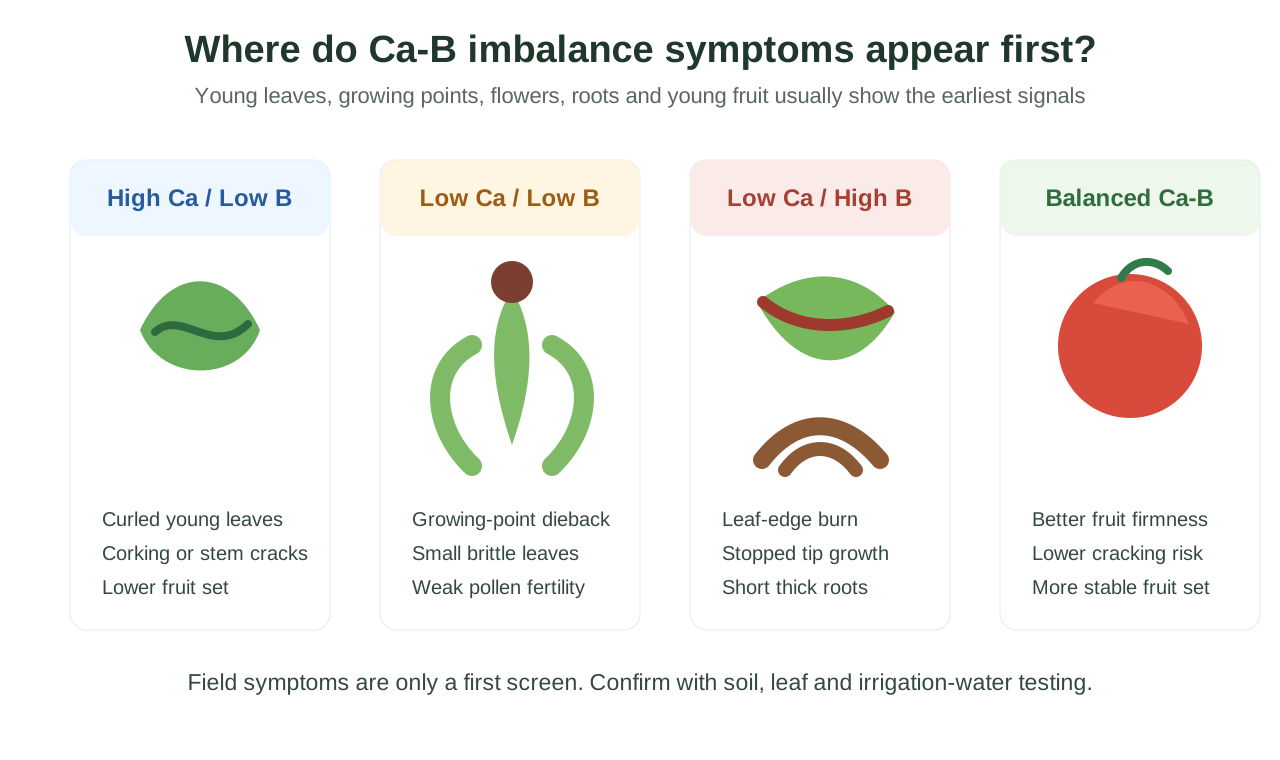
| Imbalance Type | Common Field Situation | Typical Symptoms | Management Focus |
|---|---|---|---|
| High Ca / Low B | Calcareous soil, excessive calcium input, high pH | Curled young leaves, stem cracking, corking, bitter-pit-like spots, poor fruit set | Improve boron availability and use efficient Ca-B foliar supply |
| Low Ca / Low B | Acid sandy soil, low organic matter, weak roots | Growing-point dieback, small brittle leaves, poor pollen fertility, flowering without fruit set | Supply calcium and boron while rebuilding roots and soil condition |
| Low Ca / High B | Over-applied boron, sandy soil with poor nutrient retention | Leaf edge burn, stopped terminal growth, short thick roots | Stop high-rate boron use, restore calcium supply and improve irrigation management |
| Balanced Ca-B | Healthy roots, rational nutrition and continuous supply | Better fruit firmness, lower cracking risk, more stable fruit set | Maintain the program before flowering, after petal fall and during young fruit growth |
6. Why does foliar boron alone sometimes perform poorly?
In many crops, boron has limited mobility and is mainly transported with transpiration flow. Boron sprayed on leaves may not fully move back to roots or redistribute to all deficient tissues. Some crops rich in sugar alcohols have better phloem mobility of boron, but this depends on crop species and should not be generalized.
Relying only on a single boron fertilizer during flowering or young fruit stages may create three problems: boron concentration rises locally on leaves while roots and young fruit still remain insufficient; high boron concentration may burn leaf edges or flowers; and if calcium supply is ignored, cell wall stability may still be weak, so cracking and malformed fruit may not improve.
7. Product positioning of CA150+B50
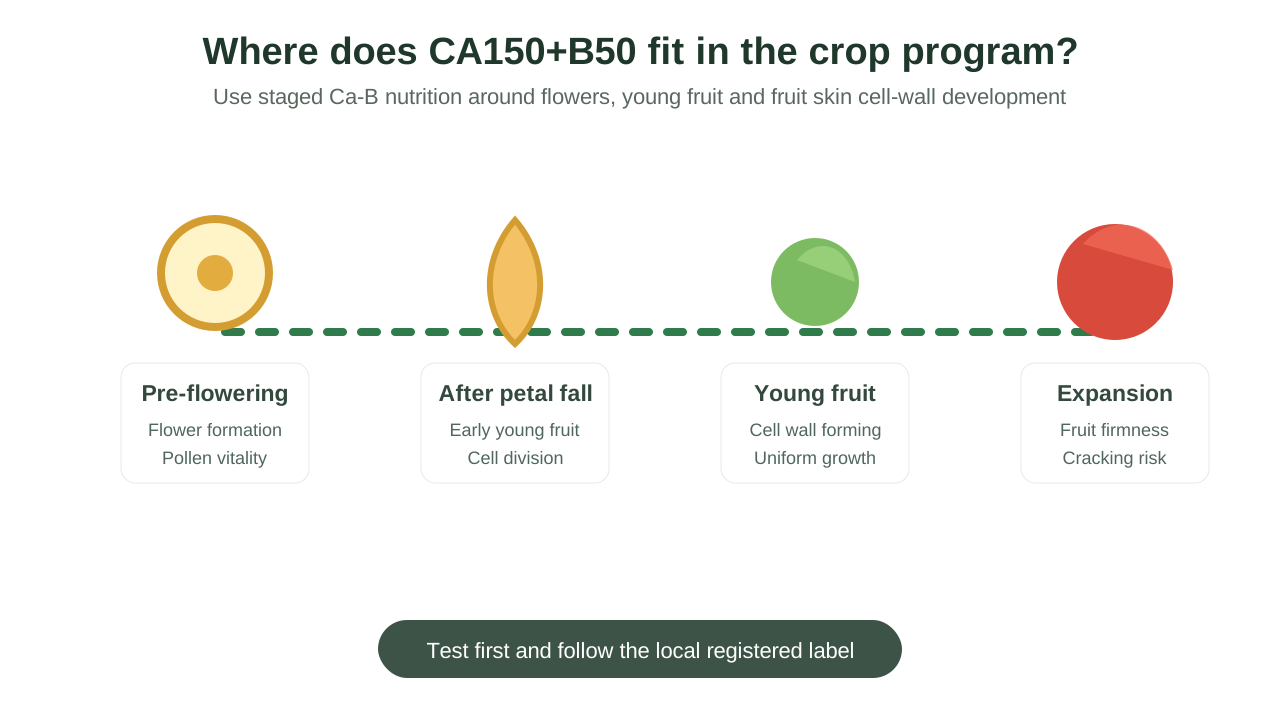
CA150+B50 is not positioned as a simple calcium fertilizer. It is a high-concentration calcium-boron nutrition solution. The product contains calcium 150 g/L and boron 50 g/L. It can be positioned as a calcium boron fertilizer, calcium boron foliar spray or liquid Ca-B fertilizer for crop stages with concentrated calcium and boron demand, such as pre-flowering, after petal fall and young fruit expansion.
Calcium helps strengthen cell walls and cell membranes. Boron supports pollen tube development, nutrient transport and pectin structure in the cell wall. Used together under suitable conditions, CA150+B50 can support fruit-set stability, fruit firmness and nutritional management of cracking, malformed fruit and abnormal young shoot growth linked with Ca-B imbalance.
8. Application guidance and risk control
Foliar application should be diluted according to crop sensitivity, local climate and registered label guidance. Always test on a small area before broad application. For fertigation or soil drenching, adjust the program according to soil pH, available boron, crop stage and irrigation water quality. Avoid high concentration and high frequency on boron-sensitive crops, sandy soils and under hot dry conditions.
If the field has weak roots, high soil salinity, low organic matter or hard irrigation water, CA150+B50 should be combined with root recovery, humic substances or organic matter management. It should not be expected to solve every problem through one foliar spray.
9. Buyer search terms and practical questions
International growers and agricultural-input distributors rarely search only for "Ca+B". They often search by crop problem and use scenario, such as fruit cracking, fruit set, blossom end rot, bitter pit, calcium deficiency, boron deficiency, tomato calcium boron fertilizer and grape cracking foliar calcium boron. For this reason, a calcium boron fertilizer content page should explain both product parameters and the crop problems it can support.
- calcium boron fertilizer, calcium boron foliar spray, liquid calcium boron fertilizer
- Ca B fertilizer, calcium and boron fertilizer, boron calcium fertilizer
- fruit set fertilizer, reduce flower drop, improve fruit firmness
- fruit cracking fertilizer, tomato fruit cracking, grape cracking, citrus fruit cracking
- blossom end rot, bitter pit in apple, calcium deficiency in plants, boron deficiency in plants
10. FAQ
What is calcium boron fertilizer mainly used for?
It is mainly used to support the concentrated calcium and boron demand during flowering and fruit development. It helps cell wall formation, pollen tube growth, fruit-set stability and fruit firmness in crops such as tomato, grape, citrus, apple and cucurbits.
When is calcium boron foliar spray most suitable?
Common use windows are pre-flowering, after petal fall, young fruit stage and fruit expansion. The rate and interval should follow crop sensitivity, local label requirements and small-area testing results.
Can calcium boron fertilizer reduce fruit cracking?
Under suitable use conditions, calcium and boron can support cell wall stability and fruit skin strength, which may reduce cracking risk. However, cracking is also affected by variety, rainfall, irrigation, temperature change, nitrogen-potassium balance and root uptake.
How is CA150+B50 different from ordinary boron fertilizer?
Ordinary boron fertilizer focuses mainly on boron supply. CA150+B50 is positioned as a calcium-boron synergistic solution containing calcium 150 g/L and boron 50 g/L for flower, young-fruit and fruit-quality programs.
Conclusion
The key to calcium-boron synergy is not simply mixing calcium fertilizer with boron fertilizer. It is understanding their shared roles in cell walls, cell membranes, pollen tubes and young fruit development. Calcium helps tissues stay firm; boron helps the pectin network connect more completely. When Ca-B nutrition is balanced, flowering, fruit set, fruit firmness and cracking-risk management become more reliable.
CA150+B50 is best positioned as a high-concentration calcium-boron nutrition solution for flowering and fruit stages, especially for fruit crops, vegetables, cucurbits and other crops where pollen vitality, fruit set, fruit firmness and cracking control are important.
For CA150+B50 technical parameters, sample request, OEM/ODM packaging, COA, TDS or MSDS/SDS support, contact agrinorm for export-ready product information.
View CA150+B50 Product Request QuoteReferences
1. Frontiers in Plant Science: Synthesis of borate cross-linked rhamnogalacturonan II
2. Plants: Interaction between Boron and Other Elements in Plants
3. Penn State Extension: Calcium Deficiency
4. UC IPM: Boron Toxicity
5. Texas A&M AgriLife Extension: Boron: Essential to Plant Nutrition and Potential for Plant Injury
6. PubMed: Boron deficiency affects pollen tube growth through calcium-related processes in apple