Field Fertilizer Value Starts with Nitrogen, but Depends on Nitrogen Efficiency
A product knowledge article based on 18-6-18 + organic matter organic-inorganic compound fertilizer
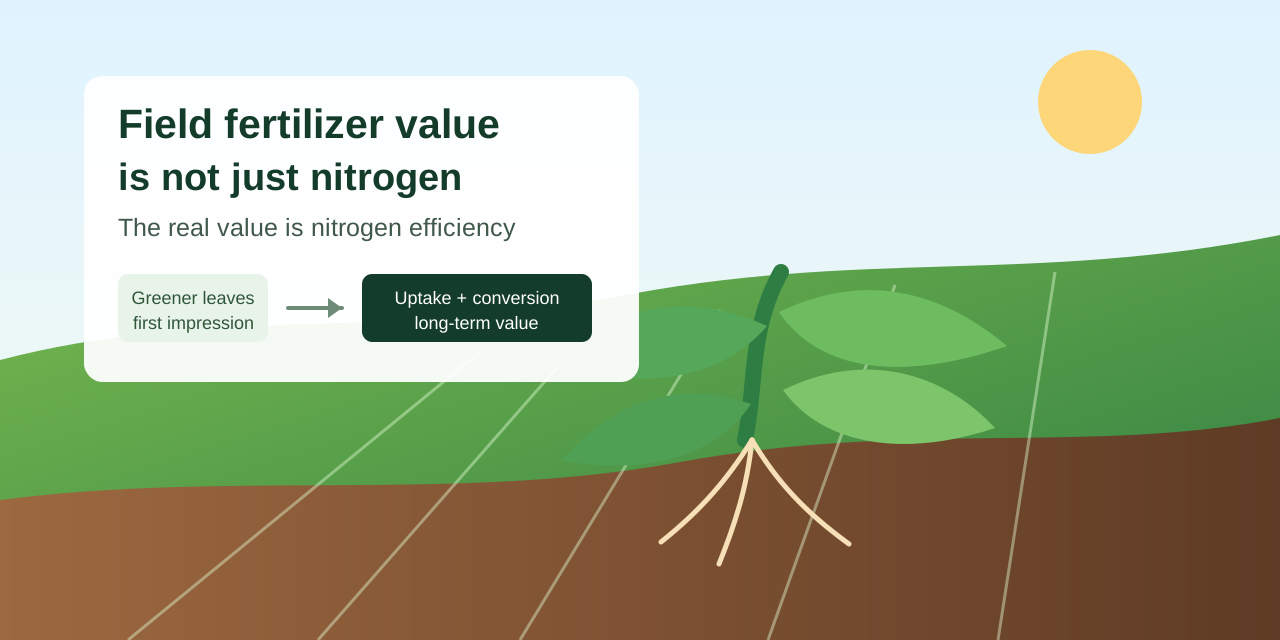
In field crop production, nitrogen often creates the first visible fertilizer response: greener seedlings, faster vegetative growth, and quicker canopy establishment. But the long-term value of a fertilizer is not determined by nitrogen content alone. It depends on whether the applied nitrogen can be absorbed, converted, and finally expressed as stable yield, quality, and return on investment.
- Why field fertilizer performance is often judged by nitrogen first
- Why nitrogen use efficiency matters more than nitrogen content alone
- How NPK, organic matter, and roots improve nutrient efficiency together
- AGRINORM 18-6-18 + organic matter product positioning
- FAQ and related fertilizer knowledge topics
1. Why fertilizer performance is often judged by nitrogen first
This view comes from long-term field experience. Nitrogen is one of the nutrients required in the largest quantities by crops. It directly participates in chlorophyll formation, protein synthesis, cell division, and biomass accumulation. In the early stage after fertilization, nitrogen response is often visible through darker leaf color, faster growth, and quicker vegetative establishment.
For distributors and growers, this first visual impression matters. If a product helps crops recover quickly and build early growth, customers are more willing to continue testing, observing, and purchasing. Therefore, nitrogen is often the first window for building trust in a field fertilizer product.
However, “looking greener” is not the same as releasing full fertilizer value. If nitrogen is absorbed quickly but later conversion is weak, or if nitrogen loss is high, roots are weak, plants grow excessively, or late-season nutrient supply declines, the final result may be poor efficiency rather than real value.
2. Nitrogen creates the first impression, but efficiency creates competitiveness
Modern fertilizer competition is no longer only about how much nitrogen a product contains. The real question is: how much of the nitrogen applied to the field is effectively absorbed by crops, and how much of the absorbed nitrogen is converted into roots, leaves, grains, fruits, or marketable yield?
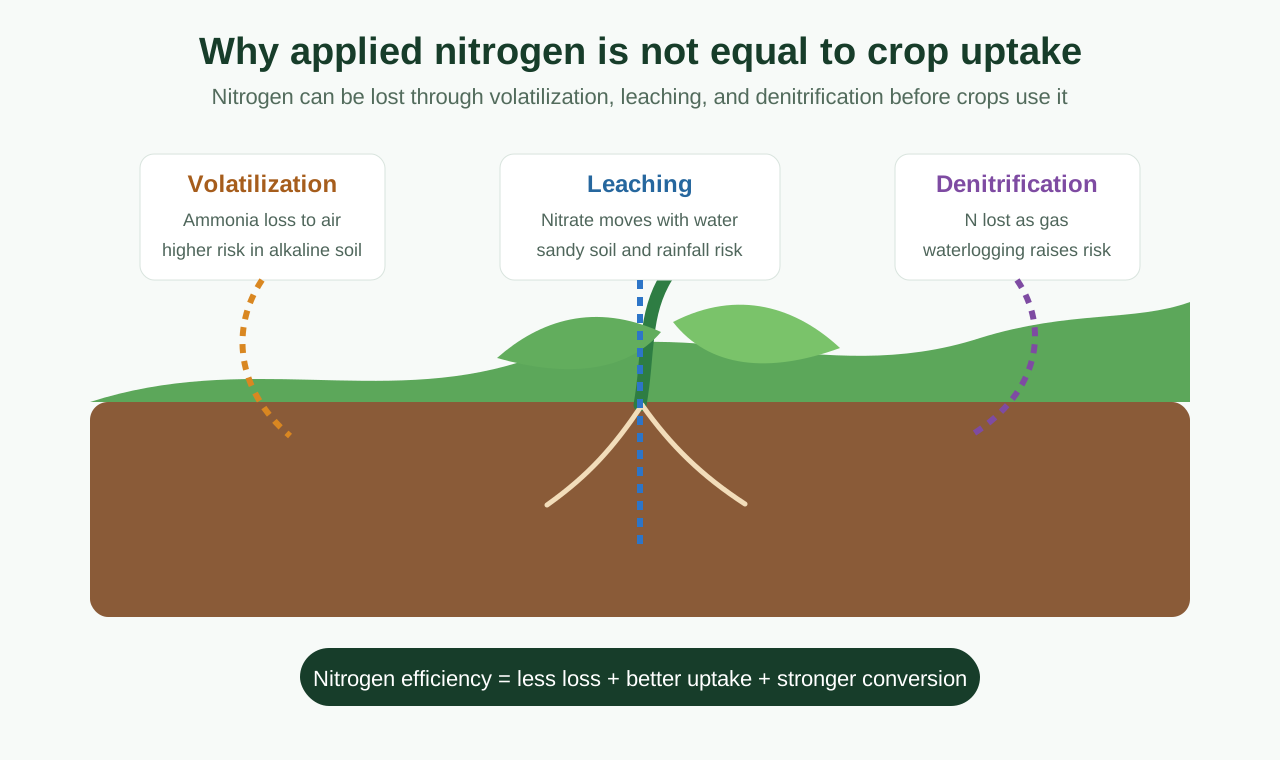
Nitrogen is highly active in soil. It may be lost through ammonia volatilization, nitrate leaching, and denitrification. These losses can become more serious under high temperature, heavy rainfall, sandy soil, flood irrigation, compacted soil, or high-pH conditions.
3. Nitrogen efficiency cannot rely on nitrogen alone
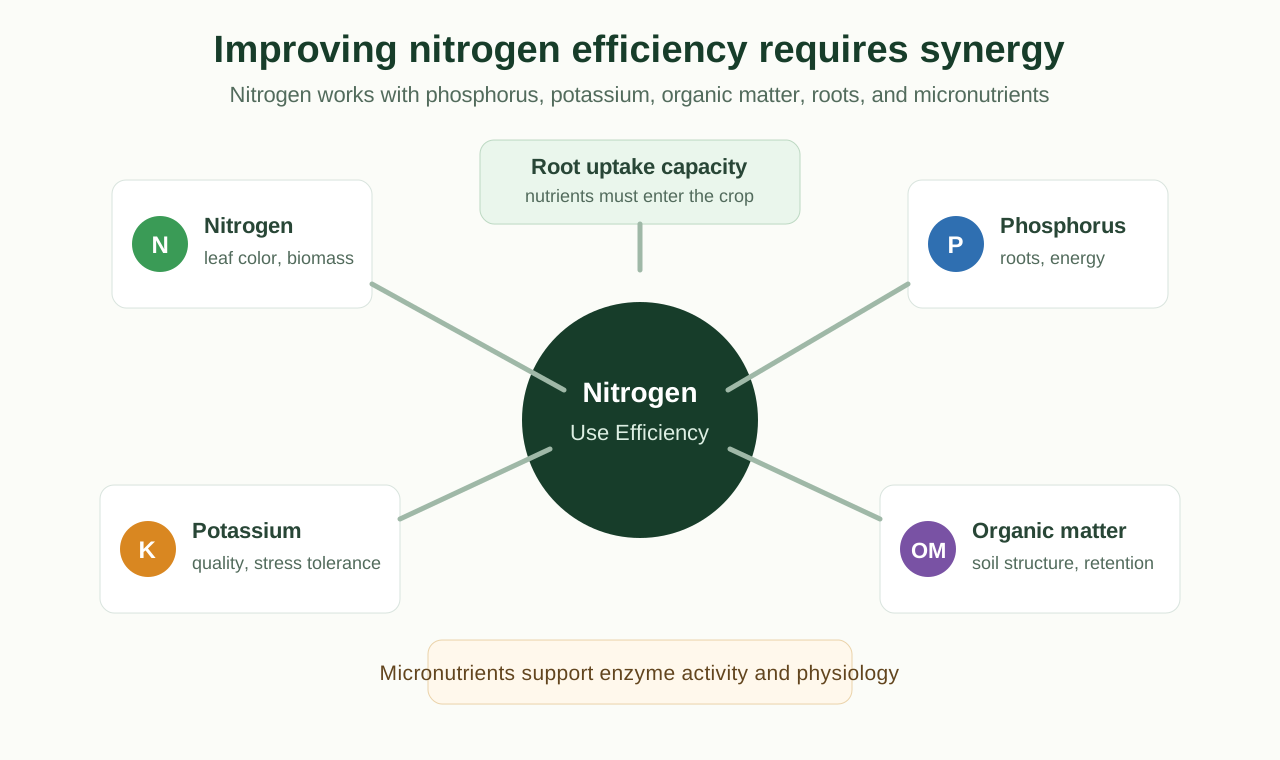
Nitrogen efficiency is not a single-element issue. It is a crop nutrition system issue. Nitrogen supports vegetative growth; phosphorus supports root development and energy metabolism; potassium supports assimilate transport, crop quality, and stress tolerance. Organic matter contributes to soil structure, water and nutrient retention, and the rhizosphere environment.
| Synergy dimension | Main function | Meaning for nitrogen efficiency |
|---|---|---|
| NPK synergy | N supports growth, P supports roots and energy metabolism, K supports transport, quality, and stress tolerance | Reduces the risk of excessive vegetative growth, weak roots, or poor late-stage conversion caused by nitrogen-only thinking |
| Inorganic nutrients + organic matter | Inorganic nutrients provide available nutrition; organic matter improves the soil environment | Helps nutrient retention and reduces strong fluctuations in nutrient availability |
| Root uptake capacity | Roots determine whether nutrients can truly enter the crop | If roots are weak, high nutrient content does not necessarily mean high uptake |
| Micronutrients and physiology | Support enzyme activity, chlorophyll formation, and stress responses | Help crops convert absorbed nitrogen into effective growth and yield formation |
4. Real farmer value: from content competition to efficiency competition
The future direction of fertilizer is not simply adding more nutrients, but helping crops use nutrients more efficiently. Farmers do not only care about the nutrient number printed on the bag. They care about cost per hectare, crop performance, yield stability, and marketable quality.
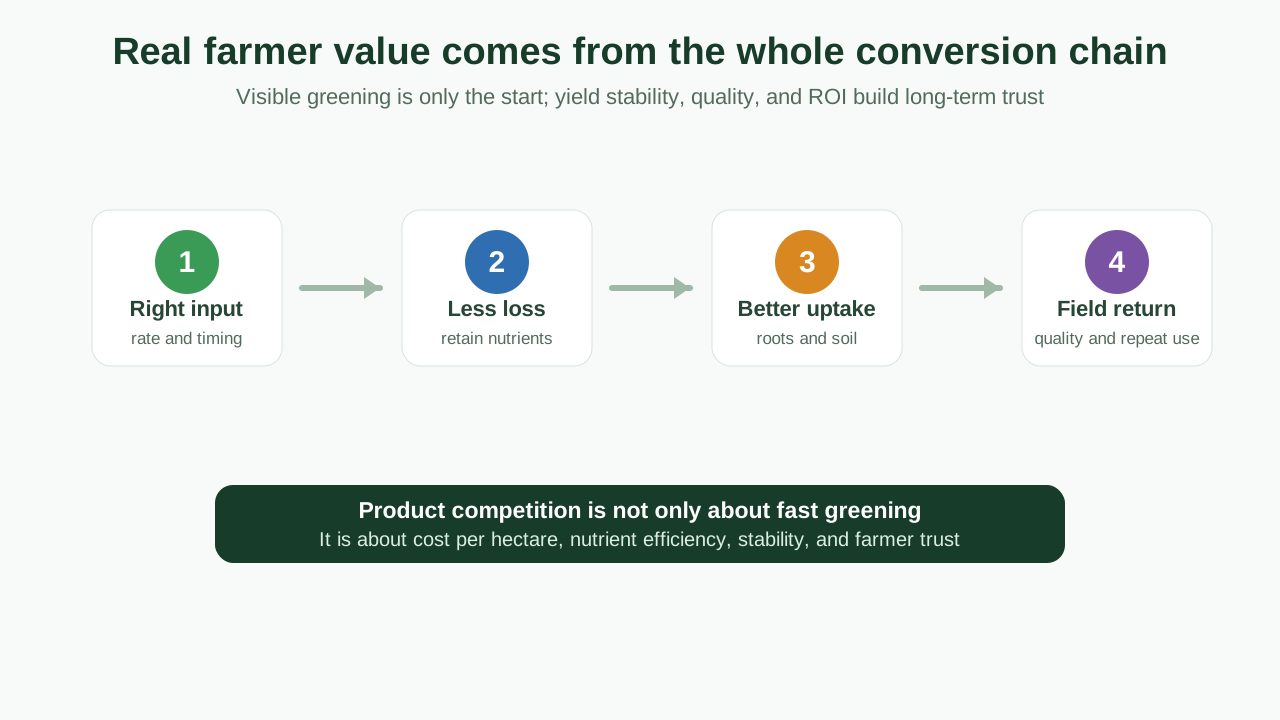
For distributors and brand owners, whether a field fertilizer can grow in the market depends on more than short-term visual stimulation. It depends on whether the product can support repeat purchase: early growth response, mid-season stability, later-stage conversion, and final yield and quality support.
5. AGRINORM Solution: 18-6-18 + Organic Matter Organic-Inorganic Compound Fertilizer
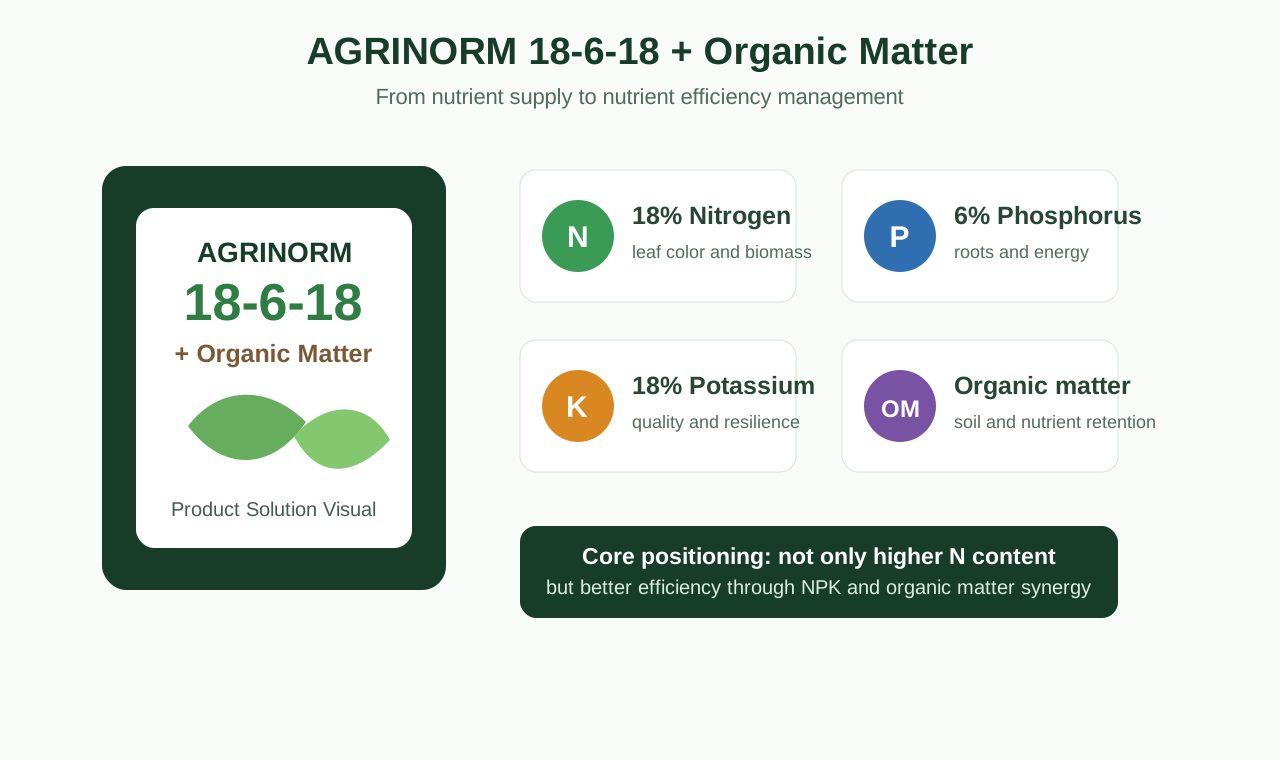
Based on modern crop nutrition management, AGRINORM 18-6-18 + organic matter organic-inorganic compound fertilizer focuses not only on nutrient supply, but also on nutrient uptake and utilization efficiency. It is suitable for field crop programs that need vegetative growth, root establishment, crop recovery, and stable nutrient conversion in the middle and later stages.
Therefore, the product message should not focus only on the “18-6-18” nutrient ratio. It should emphasize nitrogen efficiency, nutrient synergy, organic-inorganic integration, and return on investment per hectare. This matches the market shift from low-price competition to efficiency-based field crop nutrition.
6. How to communicate this value to growers and distributors
For growers, avoid overcomplicating the message. Focus on field results: early greening and growth, mid-season root and canopy status, late-stage nutrient stability, lodging risk, premature senescence, and yield formation. For distributors, emphasize that the product is not a single-nitrogen concept, but a combined value of fast nutrient supply, NPK synergy, organic matter soil support, and improved utilization efficiency.
| Audience | Recommended message | Avoid |
|---|---|---|
| Growers | Growth start, leaf color, roots, late-stage stability, and return per hectare | Only talking about high content without explaining field value |
| Distributors | Differentiation, repeat purchase logic, demo field performance, and crop solutions | Competing only on price against ordinary compound fertilizers |
| Brand owners | Product story, technical files, label claims, and local crop application programs | Absolute yield-increase promises without local evidence |
7. Application and compliance notes
Fertilizer performance varies by crop, soil, water, climate, and management level. Application programs should be designed according to local soil fertility, crop nutrient demand, irrigation conditions, and target yield. For official marketing and registration use, refer to local label requirements, COA, TDS, MSDS, and validated field trial results.
Before large-scale promotion, it is recommended to run plot demonstrations or strip trials and observe leaf color, root development, plant height, tillering or branching, late-season greenness, and yield components. This helps build a crop-specific recommendation suitable for the local market.
8. FAQ
1. What is nitrogen use efficiency?
Nitrogen use efficiency, or NUE, describes how much of the nitrogen applied to the field can be absorbed by crops, converted into plant growth, and finally reflected in yield and quality. It is influenced by nitrogen loss, root uptake, nutrient synergy, and soil conditions.
2. Why do growers first judge field fertilizer performance by nitrogen?
Nitrogen directly affects chlorophyll formation and vegetative growth. After fertilization, the most visible response is often greener leaves, stronger seedlings, and faster canopy establishment. Nitrogen builds the first trust, but it is not the only standard for long-term fertilizer value.
3. How should 18-6-18 + organic matter be positioned?
It should be positioned as a nutrient-efficiency organic-inorganic compound fertilizer for field crops, not just a regular NPK fertilizer. The core value is balanced NPK supply, organic matter support for soil, and improved nutrient uptake and conversion.
4. Can the product be promoted as guaranteed yield increase?
No. A more compliant expression is: under reasonable use conditions, it can help improve crop growth, nutrient utilization efficiency, yield stability, and quality formation. Actual performance depends on crop, soil, water, climate, and management conditions.
9. Related fertilizer knowledge topics
- nitrogen use efficiency, NUE fertilizer, nitrogen efficiency fertilizer
- 18-6-18 fertilizer, NPK fertilizer with organic matter
- organic inorganic compound fertilizer, field crop fertilizer, crop nutrition efficiency
- how to improve nitrogen use efficiency in crops
- fertilizer for better nitrogen uptake
- NPK fertilizer for field crops
- organic matter compound fertilizer benefits
Conclusion
Agriculture is moving from nutrient-content competition to nutrient-efficiency competition. A valuable fertilizer is not simply the one that supplies more nutrients, but the one that helps crops absorb, convert, and use nutrients more efficiently.
AGRINORM works from crop demand, combining nutrient synergy, efficiency improvement, soil enhancement, and plant health management to support more scientific, stable, and return-oriented crop nutrition programs for global growers.
For 18-6-18 fertilizer technical parameters, sample request, OEM/ODM packaging, COA, TDS or MSDS/SDS support, contact agrinorm for export-ready product information.
View 18-6-18 Product Request Quote